Dear Colleagues,


People make mistakes. Computers make mistakes. Radar operators make mistakes. No one is perfect. No system is perfect.

January 13, 2018. The citizens of Hawaii are formally notified by official sources that they are under nuclear attack and would soon receive a barrage of nuclear weapons. Radio, television, social media, and every other channel of communication quickly amplifies the alarm. Panic sets in. People think they will die within minutes. More than half an hour goes by before the warning is corrected. It was a false alarm.


Imagine if such a drama unfolds in the capital of India or Pakistan? As people sit in their cars in Delhi or Lahore, wondering whether to be terrified or simply frustrated by the grid lock traffic, people tasked with the decision to launch nuclear weapons in self-defense, or not, would rapidly need to decide the fate of humanity. In real time, they would have very little time to defuse what they would assume is an actual crisis. They would not have thirteen days to decide, like the US or the Soviet Union had during the Cuban Missile Crisis. They would have minutes.

The incident in Hawaii was not the first time this problem occurred, and it’s unlikely to be the last. Such dilemmas will arise anywhere that decision makers are challenged with too little time to evaluate information arising from computers or human activity.

I call it the problems of Oops and Bozo. Machines can go Oops, and on any given day most of us are capable of being Bozos. There are even some very arrogant people who are Bozos nearly all the time.  A short article on the subject, the Process of Zero, may be of interest to you.

Because the people of Hawaii are uniquely aware of the precarious situation in which nuclear weapon place us all, they have an authentic and sober awareness, rarely found elsewhere. This is why it was so insightful for the brilliant and successful former Hawaiian lawyer and UN Special Advisor,  Audrey Kitagawa, to lead the International Academy for Multicultural Cooperation’s initiative in hosting public events that raise awareness of the threats posed by nuclear weapons.

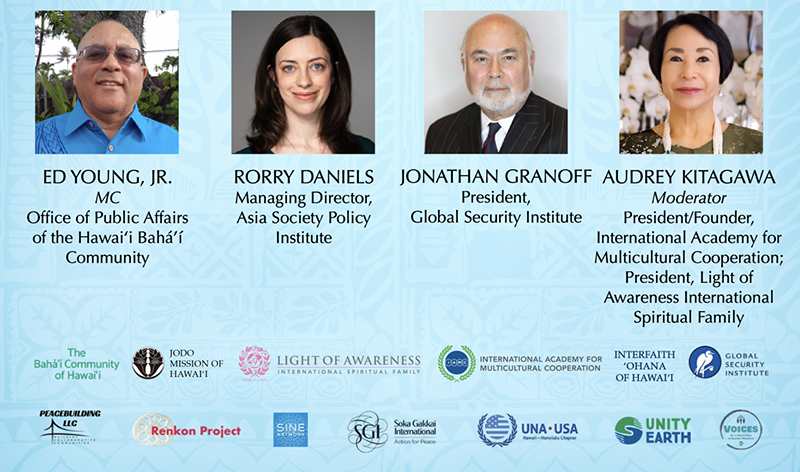
I was honored to participate in the events below along with Audrey and Rorry Daniels who serves as the  Managing Director of Asia Society Policy Institute (ASPI). She is an accomplished scholar, exceptionally gifted with the ability to communicate sophisticated insights in clear easily understood language.

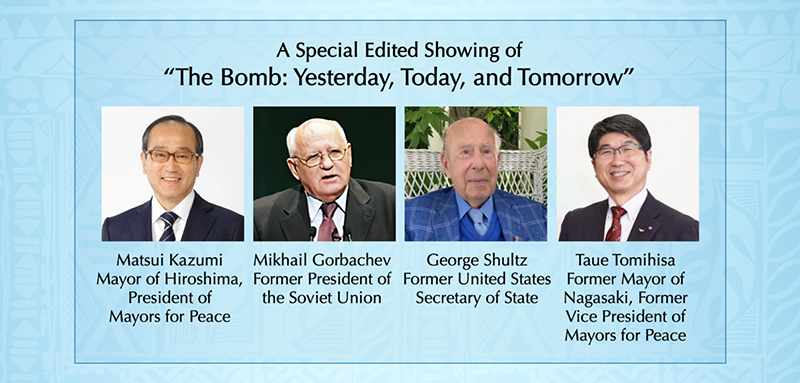
Please share the video below of the September 8th event that features insights from President Mikhail Gorbachev and Secretary George Shultz. It expresses the principles that we need today to move from hazard to safety. And remember that September 26th every year is United Nations Day for the Total Elimination of Nuclear Weapons.

80th Commemorative Anniversary: Remembering Hiroshima and Nagasaki 


The 80th Commemorative Anniversary: Remembering Hiroshima and Nagasaki was held on September 8, 2025, at the Hawai‘i State Capitol Senate Chamber Auditorium in Honolulu. The dialogue, that includes recorded insights from President Mikhail Gorbachev and Secretary of State George Shultz is outstanding, and we urge you to share the video with colleagues, friends, and family.

Watch the Full Video
Jonathan Granoff's Presentation

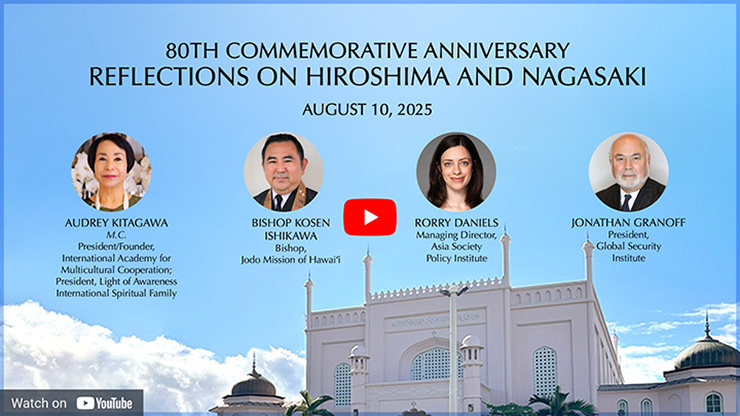
80th Commemorative Anniversary: Reflections on Hiroshima and Nagasaki 


This event held on August 10, 2025, at a Buddhist center in Honolulu — the Jodo Mission of Hawai‘i — delivered powerful narratives from the heart. 

Watch the Full Video
Jonathan Granoff's Presentation

To see ongoing updates, please visit the Multicultural Cooperation website, subscribe on YouTube, or follow them on Facebook or Instagram. www.multiculturalcooperation.net 

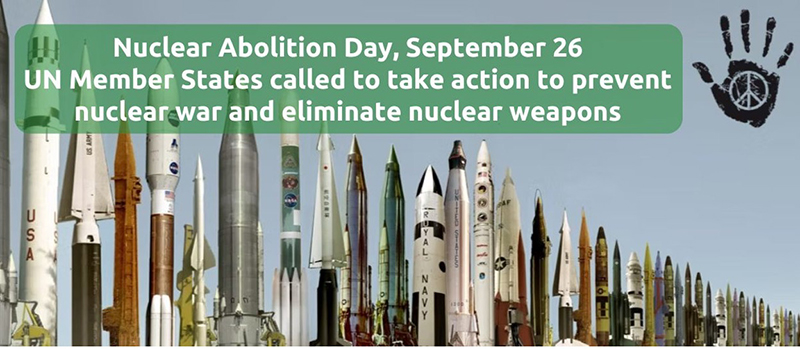
September 26th every year is United Nations International Day for the Total Elimination of Nuclear Weapons. We urge your attention to the announcement and statement circulated by Unfold Zero, an initiative of which the Global Security Institute is a founding member.

Read More

We Value Your Support


We believe as Senator Alan Cranston used to say, “Nuclear weapons are unworthy of civilization.” We research, write, convene, and  work on many levels, from heads of state to public advocacy and need your strong economic support to succeed.

Donate Here